California Warehouse Building Just Got Harder. Plan 2027 Capacity Early.
Ever tried to add a room onto a house in a neighborhood with strict setback rules? The project spends more time with a tape measure than a hammer. Since January 1, 2026, every new or expanded California warehouse project near homes, schools or parks has played by a rulebook like that one.
The rulebook is Assembly Bill 98, which Governor Gavin Newsom signed on September 29, 2024, and which Senate Bill 415 amended in 2025. Its standards cover new logistics buildings and any expansion that adds 20% or more to an existing building’s square footage (California Government Code 65098). Here is what the law requires, and what it means for anyone who will need logistics warehousing space in 2027.
What the law changed
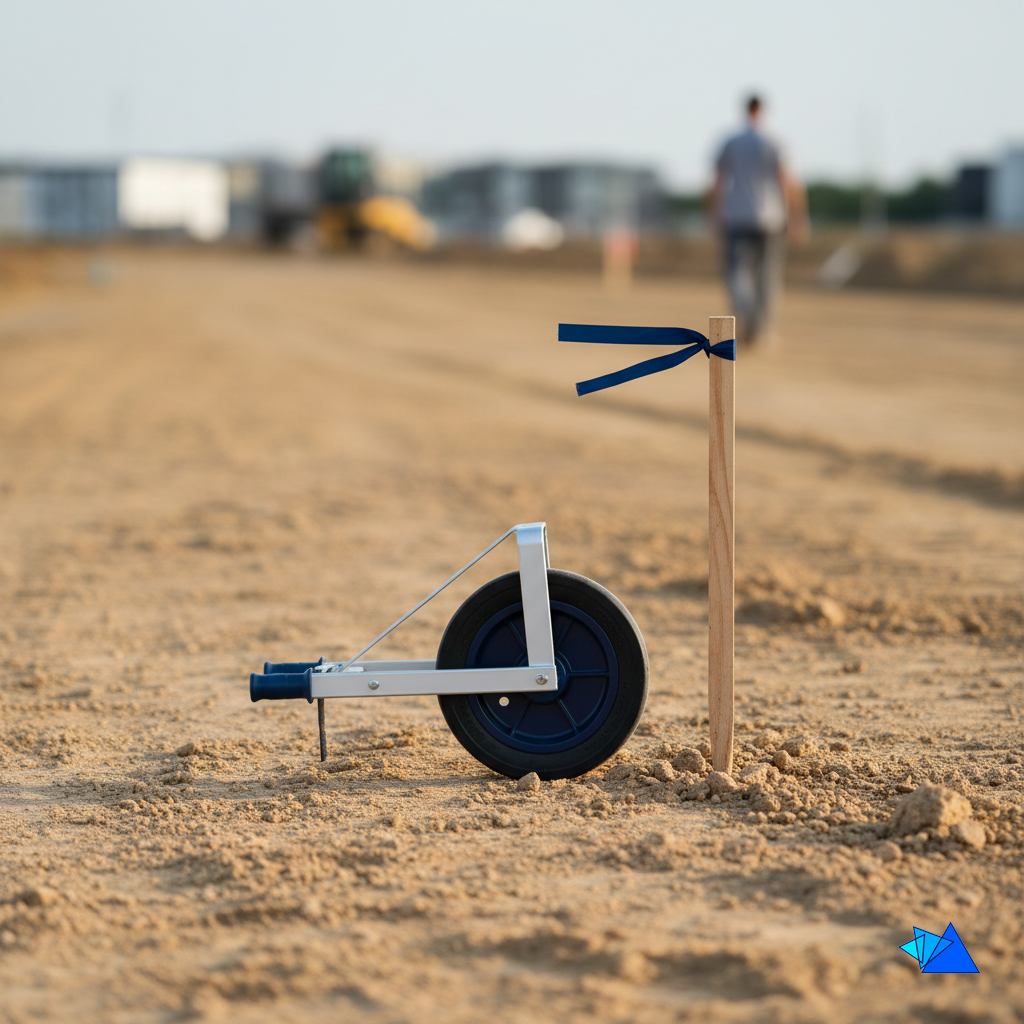
The trigger is distance. The standards apply when a project’s truck loading bay sits within 900 feet of a sensitive receptor, which the statute defines as a home, school, daycare, public park or playground, nursing home or hospital. On land already zoned industrial, buildings of 250,000 square feet or more must place their loading bays at least 300 feet from the property line of the nearest sensitive receptor. On land that is not zoned industrial, the setback is 500 feet whatever the building’s size, and smaller buildings on industrial land must at least face their loading bays away from neighbors (California Government Code 65098.1). For warehouse and distribution services buyers, those 2 numbers decide which parcels can host a modern dock at all.
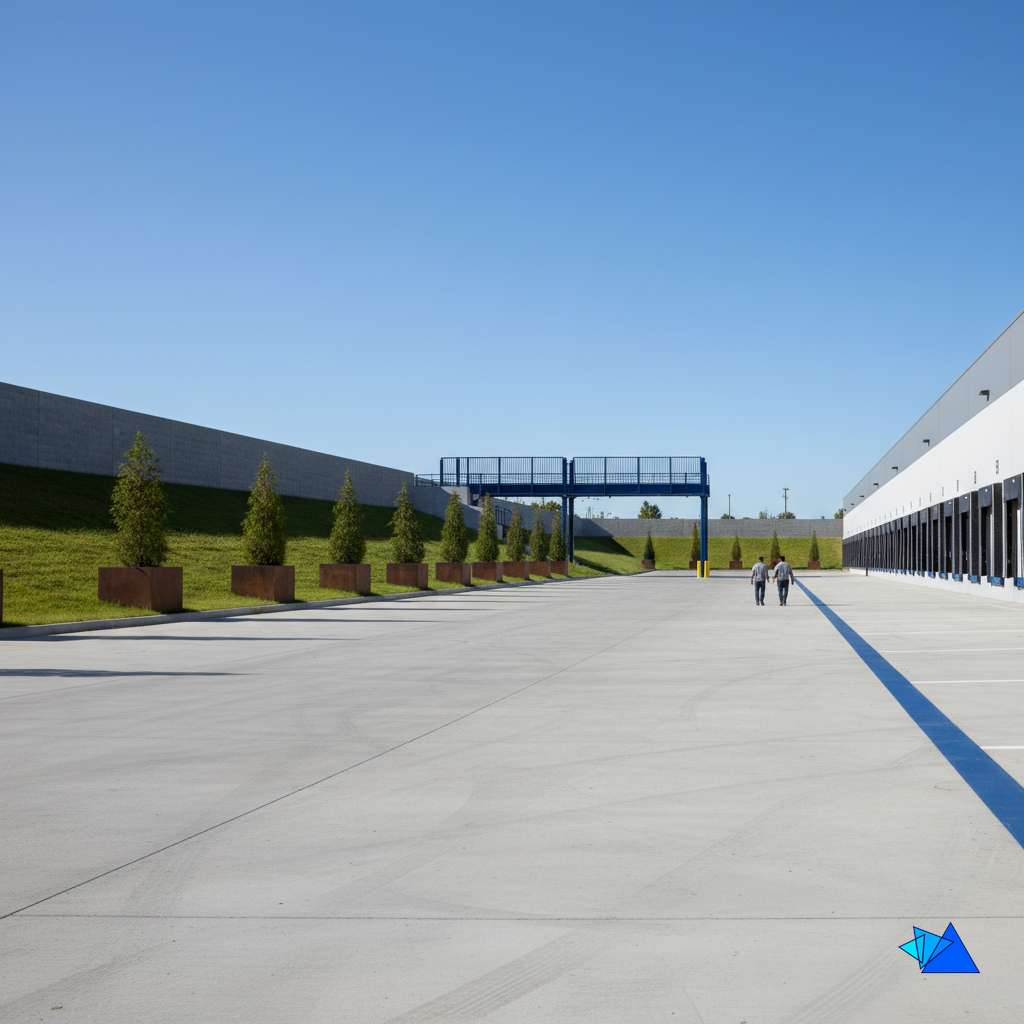
Then comes the buffer. A covered project must be screened from its neighbors by a buffer at least 50 feet wide on industrial land and 100 feet wide elsewhere, with a wall or landscaped berm 10 feet or taller and 2 rows of evergreen, drought tolerant trees planted no more than 40 feet apart (California Government Code 65098.2). Every foot of buffer is a foot that can’t hold racking, trailer parking or a future fulfillment warehouse expansion.
The building changes too. Covered projects must meet design standards covering energy code compliance, skylights, electric vehicle charging infrastructure and high efficiency HVAC. The stricter tier requires every class of on-site forklift to be zero emission by January 1, 2028, where that is operationally feasible and the equipment is commercially available, 2 years ahead of the base standard’s January 1, 2030 deadline (California Government Code 65098). Electric lift trucks are already common on modern floors, and material handling specialists like Raymond build electric fleets and automated guided vehicles for exactly these facilities. The developer pays first, and logistics and warehousing tenants see the cost later in the rent.
Trucks get rules of their own. Covered sites need a separate truck entrance off a truck route or a road that mainly serves commercial or industrial traffic, with truck circulation kept away from neighbors. Cities and counties must also add truck routes to their general plans: by January 1, 2026 inside the warehouse concentration region of inland Riverside and San Bernardino counties, by January 1, 2028 for larger jurisdictions elsewhere, and by January 1, 2030 for cities under 50,000 people and counties under 100,000 (Allen Matkins summary of SB 415, October 2025). Until a local truck route map exists, any new warehousing logistics site carries one more open question.
What happened to new supply
AB 98 is not the only force slowing construction, and nobody should pretend otherwise. But the law lands on a market that was already pulling back. In Southern California’s Inland Empire, the construction pipeline stood at 6.2 million square feet in the second quarter of 2026, 41.3% below a year earlier, while new leasing reached 15.5 million square feet in that single quarter (CBRE Inland Empire Industrial Figures, Q2 2026). Nationally, the pipeline moved the other way, up 18% year over year to about 305 million square feet (Cushman & Wakefield U.S. Industrial MarketBeat, Q2 2026). That gap is a California warehouse story.
Northern California is building, but look at who the buildings are for. As recently as the end of 2025, the Central Valley construction pipeline was 95% build to suit projects, and 5.3 million square feet of build to suit space is still underway (Cushman & Wakefield Central Valley Industrial MarketBeat, Q2 2026). Build to suit means the tenant signed before the concrete was poured. Those buildings add capacity for one company and very little for the open market of brands shopping for fulfillment services.
Meanwhile, demand is climbing. Central Valley leasing reached about 6.2 million square feet in the second quarter of 2026, up 36.7% year over year, and vacancy slipped to 9.3%, with San Joaquin County at 9.6% after 4 straight quarterly declines (Cushman & Wakefield Central Valley Industrial MarketBeat, Q2 2026). The same report expects rent growth to regain momentum, especially for newer Class A buildings, the kind most warehousing & logistics operations want.
What it means for your 2027 capacity
Put the pieces together. New buildings near population centers now need more land, deeper setbacks and cleaner equipment, so fewer of them will pencil out close to the customers they serve. The ones that do get built are increasingly spoken for before they open. And demand is recovering. That combination is a reason to expect less open space near customers in 2027, especially wherever industrial land sits close to neighborhoods. For logistics warehousing buyers, the soft market of the last 2 years is a risky guide to the next one.
The standards apply to new projects and to expansions of 20% or more, not to buildings already standing. That makes today’s stock near population centers the main supply for the next few years, and it is the space every brand in the region competes for when a lease comes up. Food logistics shippers start with the smallest pool, because they need food grade space before location even enters the conversation.
So what should a shipper do with this? Forecast space a year out instead of a season out. Price multi-year commitments against a market where new supply is constrained, not against the soft vacancy numbers of 2025. Ask whether a growth plan depends on a building that has not been built yet, and where that building could legally go. Spot space is the first thing to disappear when supply is thin, and warehouse and distribution services pricing tends to follow supply.
Industry groups follow these rules closely. The International Warehouse Logistics Association connects warehouse operators and shippers across North America and follows the regulations that shape both. For anyone planning warehousing logistics needs into 2027, it’s a useful place to watch how California’s standards play out on the ground.
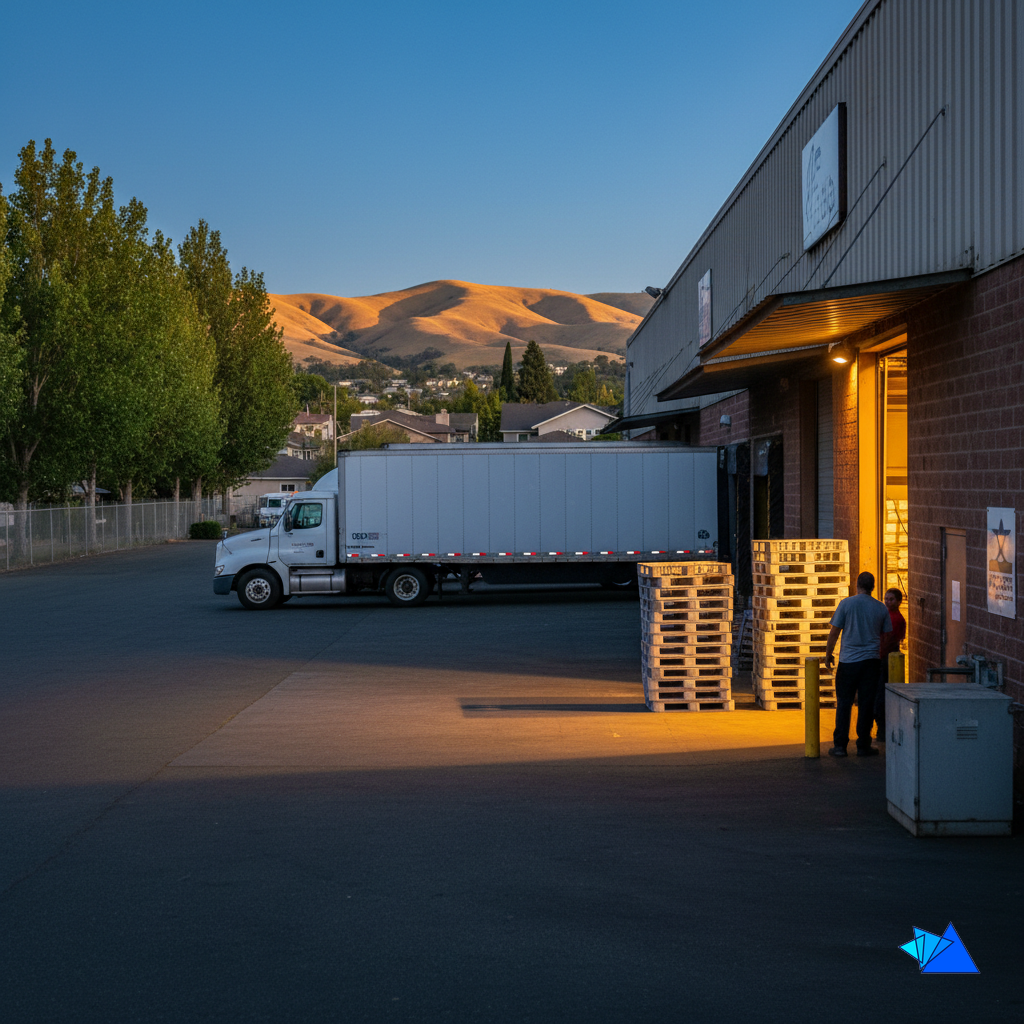
AB 98 was written to protect neighborhoods next to warehouses from truck traffic, noise and diesel emissions. For shippers, the side effect is simple arithmetic: fewer new buildings near customers and more demand chasing the space that already exists. Plan your California warehouse capacity a year ahead, and a tight market becomes a scheduling problem instead of a surprise.

ABOUT PRISM LOGISTICS: As a warehouse services and warehouse distribution management company, PRISM Logistics provides value added fulfillment and pick & pack services for B2B and B2C operations in California. For more information about PRISM Logistics Warehouse and Distribution services, request a quote and follow on Facebook and LinkedIn.